
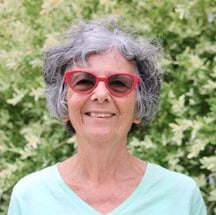
Lilliane Birch shares the Holocaust experiences of her parents, John and Anka Nachtigal, whose lives took dramatically different paths during World War II. Through their story, students learn about Jewish life in prewar Poland, survival through hiding, Auschwitz and Dr. Josef Mengele’s medical experiments, the experiences of Polish soldiers captured by the Soviets and imprisoned in labor camps in Siberia, the refugee experience after the war, and the challenges of rebuilding a new life in North America. Lilliane also explores the lasting impact of trauma across generations and encourages students to reflect on resilience, hope, kindness, and the choices individuals make in the face of hatred and injustice.
About Lilliane
Lilliane Birch was born in Paris, France, after World War II and immigrated to the United States with her parents in 1952. She spent many years as a high school mathematics teacher in Providence and, after retiring, continued teaching at a charter school. She is the proud mother of two children and grandmother of four.
Today, Lilliane remains deeply involved in her community. She volunteers weekly with Meals on Wheels, serves monthly at a local soup kitchen, attends services at her synagogue, participates in a book club, lunch group, and senior walking group, and enjoys attending concerts.
Since 2009, Lilliane has shared her family’s Holocaust story through the Sandra Bornstein Holocaust Education Center. Through her presentations, she honors her parents’ experiences while helping students and community members understand the consequences of hatred, antisemitism, and prejudice. She reminds audiences that hope, faith, resilience, and even a single act of kindness can save a life.
Parents: John and Anka Nachtigal
Before the War
Both of Lilliane’s parents grew up in Kraków, Poland.
Their Holocaust Story
Lilliane’s mother survived by hiding in several locations in Kraków before being deported to Auschwitz, where she endured the horrors of Dr. Josef Mengele’s experiments. Her father served in the Polish Army, was captured by the Soviets, imprisoned in a labor camp in Siberia, and later parachuted back into occupied Poland.
After the War
After the war, both made their way separately to Paris before immigrating to Montreal aboard refugee ships and eventually settling in Hartford, Connecticut. Their early years in America were marked by poverty. Lilliane’s mother was too ill to work for many years, while her father supported the family by working in a factory. Over time, compensation from the German government and their determination allowed them to purchase a small home and business, reconnect with surviving relatives, and build a new life together. They later enjoyed several happy retirement years in Florida.