
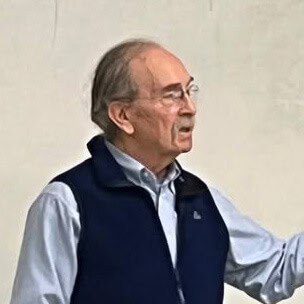
David Spitzman shares the Holocaust experiences of his parents, Rachel (née Turgel) and Meyer Spitzman, whose stories reflect both the devastation of the Holocaust and the resilience of those who survived. Through their story, students learn about Jewish life in prewar Lithuania and Poland, the Vilna Ghetto, the mass murder of Jews at Ponar, forced labor and concentration camps including Kaiserwald, Stutthof, and Bergen-Belsen, the experiences of Polish soldiers during World War II, displaced persons camps, and rebuilding life in the United States. David also explores the lasting effects of intergenerational trauma, the responsibility of second-generation descendants to preserve Holocaust memory, and the importance of confronting antisemitism, prejudice, and hatred.
About David
David Spitzman is the son of Rachel and Meyer Spitzman and grew up in Providence alongside other children of Holocaust survivors. A respected businessman, he has been a longtime member of the Sandra Bornstein Holocaust Education Center’s Speakers’ Bureau, where he shares his parents’ story with students and community groups.
Along with his sister, Francine Denerstein, David is committed to preserving his family’s history and ensuring that future generations understand the human impact of the Holocaust. He is also an active member of the Center’s Second Generation group, helping to honor the memories of Holocaust survivors while encouraging others to stand against antisemitism, prejudice, and hatred.
David often reflects on the intergenerational effects of the Holocaust, helping audiences understand how the trauma experienced by survivors shaped the lives of their children and future generations.
Parents: Rachel Spitzman (née Turgel) and Meyer Spitzman
Before the War
Rachel Turgel was born in Vilna (Vilnius), Lithuania, on November 17, 1922. She grew up in a religious Jewish family. Her father was a tailor, and the family maintained a kosher home. Meyer Spitzman was born in June 1916 in Niwka, near Sosnowiec, Poland. He also came from a religious Jewish family. His father owned a butcher shop, and his grandfather was a carpenter.
Their Holocaust Story
When Germany invaded Poland, Meyer was serving in the Polish military. He fought on the front lines, was wounded, captured as a prisoner of war, escaped, and was later recaptured. He endured forced labor before being imprisoned in the Five Rivers labor camp and later Bergen-Belsen.
Rachel’s life changed dramatically after the German occupation. Her father was arrested on Yom Kippur along with thousands of other Jewish men. Rachel and her mother were confined to the Vilna Ghetto, where they survived repeated Aktionen by hiding in malinas, or secret hiding places. Her mother was deported to Ponar and murdered. Rachel was later deported to Kaiserwald, where she was forced to sew German military uniforms, and then to Stutthof concentration camp. After being caught smuggling food to help another prisoner, she was brutally tortured. Near the end of the war, she was transported across Europe before eventually being liberated. Rachel and Meyer met after the war in the Bergen-Belsen Displaced Persons Camp.
After the War
Rachel and Meyer remained in the Bergen-Belsen Displaced Persons Camp while awaiting permission to immigrate to the United States. With the sponsorship of the Berry family, they arrived in Rhode Island in December 1949 and rebuilt their lives. Meyer worked as a carpenter, and Rachel worked in the jewelry industry. Together they built a family and became part of Rhode Island’s community of Holocaust survivors.